
Live one-to-one language study
Quranic Arabic Course Online: Understand the Language of the Quran
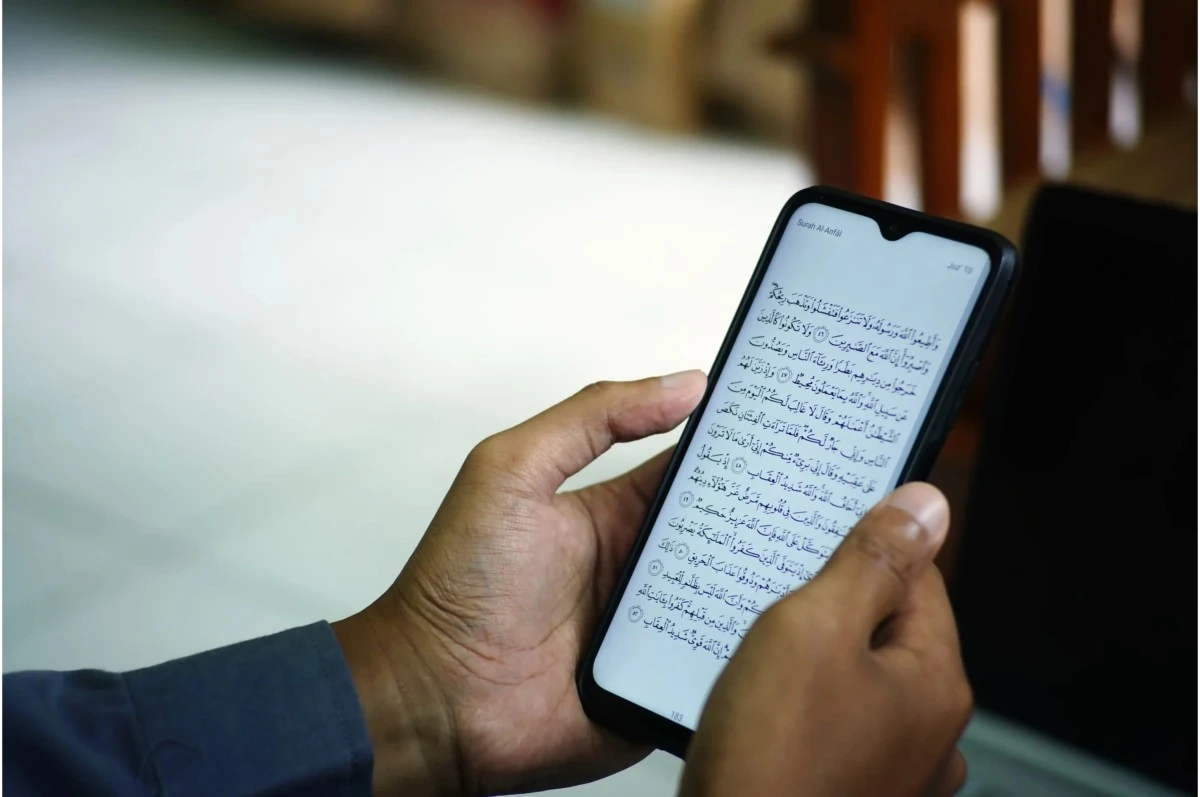
You may recite an Ayah correctly, yet still depend on a translation to understand it. That gap can make familiar words feel new each time.
Our Quranic Arabic course teaches how Quranic words and sentences work. You study vocabulary, grammar, morphology, and recurring patterns through live one-to-one lessons.
Each concept has a practical purpose: recognize what a word means, how its form changes, and what role it plays within a sentence.
Begin at a level matched to your current Arabic ability.
Language for comprehension
What Is Quranic Arabic?
The Quran uses Quranic Arabic, a form of Classical Arabic. Its vocabulary, grammatical structures, and rhetorical features carry layers that a translation cannot reproduce completely.
Learning it does not require memorizing every rule before opening the Quran. A well-ordered course introduces one pattern, demonstrates it in context, and returns to it through guided practice.
You begin with frequent words and basic sentence relationships. Later lessons explain how word forms, endings, and placement contribute to meaning. As your knowledge grows, familiar passages become easier to follow during recitation, Salah, and personal study.
Language patterns found in revelation
Lessons emphasize classical usage, root-based vocabulary, morphology, recurring Quranic expressions, and sentence analysis.
Present-day formal communication
General Arabic courses often emphasize current vocabulary, writing, listening, media language, and everyday formal expression.
The two forms share much of their grammar and vocabulary. The focused Quranic route suits learners whose immediate goal is understanding the Quran.
A suitable starting point
Who Can Join This Quranic Arabic Course?
You can begin with limited vocabulary. Your teacher assesses what you already know and chooses an appropriate entry point.
Fluent readers seeking meaning
Suitable for learners who recite confidently but still rely heavily on translation.
Learners familiar with Salah
Build on expressions you already recognize and connect them with vocabulary and grammar.
Beginners with reading ability
Slow reading is acceptable, but you should recognize joined letters and decode basic Arabic words.
If you are still learning letters or joining forms, first build that foundation through our online Quran classes.

Direct explanation and application
How Our Online Quranic Arabic Classes Work
These are live one-to-one lessons, so the teacher can work at your pace. You do not need to keep up with a fixed group syllabus.
A lesson begins with a short review. The teacher introduces one new rule, demonstrates it through selected examples, and then asks you to apply it.
Review
Recall earlier vocabulary and grammar before introducing new material.
Explanation
Study one rule through clear examples selected from Quranic language.
Application
Identify the same pattern independently inside a new word or sentence.
Correction
Resolve difficult endings, verb forms, or pronoun references before progressing.
Revision
Earlier material returns in later examples so knowledge remains active.
Progress check
Demonstrate the skill without prompts before the next stage begins.
This format makes online Quranic Arabic classes suitable for learners who need direct explanation, regular correction, and clear progression.
From words to complete analysis
Quranic Arabic Course Curriculum
The curriculum develops vocabulary and application alongside grammar. Each level supplies the knowledge needed for the next.
Vocabulary and Basic Grammar
Learn how Arabic classifies a word as an ism, fi‘l, or harf and begin reading simple nominal and verbal sentences.
- Pronouns and demonstratives
- Gender and number
- Definite and indefinite nouns
- Common prepositions
- High-frequency Quranic vocabulary
Nahw, Sarf, and Root Words
Nahw explains sentence relationships, while sarf explains how word forms develop from roots and patterns.
- Past and present verbs
- Attached pronouns
- Possessive structures
- Adjective agreement
- Raf‘, Nasb, and Jarr
Sentence Structure and Guided Analysis
Bring earlier skills together through longer Quranic sentences and closer attention to context.
- Embedded clauses
- Conditionals and emphasis
- Shifts in word order
- Context-sensitive analysis
- Grammar alongside Tafseer
A sequence that protects the foundations
A Structured Progression for Quranic Study
Students should meet a rule after they possess the knowledge needed to understand it. Introducing advanced morphology too early creates terminology without comprehension.
Established resources such as the Madinah Arabic Books follow this movement from basic sentence patterns toward increasingly detailed grammar. The teacher can slow down when foundations need attention, while stronger students move forward without repeating material they already command.

Vocabulary and morphology together
How Root Words Reveal Recurring Quranic Patterns
Many Arabic words grow from a root, often containing three consonants. Patterns built around that root can indicate action, description, intensity, participation, or another relationship.
The root does not give a complete translation by itself. Context, grammatical form, and established usage still determine how a word functions in a passage.
Its value lies in recognition. A familiar root gives you a starting point when you meet a new form, while sarf explains what changed.
Vocabulary tells you what a form may mean. Grammar shows how that meaning connects with the surrounding words.

Practical signs of progress
What You Will Be Able to Understand
Progress appears in small, useful moments. You may recognize the subject of a sentence, follow a pronoun reference, or understand why a familiar word has changed form.
- Recognize frequent Quranic vocabulary.
- Understand complete phrases used in Salah.
- Follow pronoun references across a sentence.
- Notice how roots connect related words.
- Identify basic nominal and verbal structures.
- Follow more of a passage before consulting translation.
The course does not replace scholarly Tafseer. It provides a linguistic foundation so you can read explanations with sharper questions and closer attention.
Specific correction
Why Learn Quranic Arabic with a Live Teacher?
Recorded lessons can introduce a rule, and apps can support vocabulary review. Neither can identify the exact reason you applied a rule incorrectly.
A live teacher can question your reasoning, correct the error, and test the same point through a different example. One-to-one teaching spends more time on difficult verb patterns and moves quickly through concepts you already understand.
This matters when learning Quranic Arabic grammar because a small misunderstanding in an early lesson can affect every later sentence analysis.
Measurable progress, not promises
How Long Does It Take to Understand Quranic Arabic?
There is no honest single timeline. Your starting level, lesson frequency, revision habits, and goals all affect progress.
Within the first few months, consistent learners can recognize common vocabulary and basic sentence patterns. Independent analysis requires a longer period of structured study and application.
Short, regular revision works better than occasional heavy study. Your teacher tracks which skills are secure and which need further practice.
Choose the skill you need next
Connect Arabic Study with Your Wider Quran Learning
Language study answers questions about vocabulary, form, and sentence relationships. Correct recitation requires a separate focus on pronunciation and recitation rules.
Our online Tajweed course covers letter articulation, recitation rules, stopping, and correction during live lessons.
For a broader preparation plan, read our guide on how to learn Quranic Arabic.
Different routes, different goals
Quranic Arabic builds language comprehension. Tajweed develops accurate recitation. Reading instruction establishes the foundation needed for both.
Discuss Your Starting LevelQuestions before you begin
Frequently Asked Questions About Quranic Arabic
Is Quranic Arabic different from Modern Standard Arabic?
Yes, but they are closely related. They share major grammatical foundations and much vocabulary. Quranic Arabic concentrates on classical usage, Quranic expressions, morphology, and sentence analysis; Modern Standard Arabic gives more time to current writing, media vocabulary, listening, and formal communication.
Do I need to read Arabic before joining?
You should recognize joined letters and read basic words, even if your reading remains slow. Learners who cannot yet decode Arabic should begin with reading instruction before detailed language analysis.
How should a beginner learn Quranic Arabic?
Begin with frequent vocabulary, basic word categories, pronouns, and simple sentence patterns. Study each rule through Quranic examples, then practise identifying it independently with regular teacher feedback.
Can I understand Quranic Arabic in three months?
Three months of consistent study can produce clear progress in common vocabulary and elementary grammar. It will not usually provide independent command. Treat it as a strong first stage rather than a finish line.
What should the best online Quranic Arabic course include?
Look for a clear sequence, live teacher access, vocabulary taught in context, nahw, sarf, guided sentence analysis, a starting-level assessment, and regular review. It should also distinguish linguistic study from Tafseer and Tajweed.
Begin with a clear starting point
Begin Your Quranic Arabic Course Online
You do not need to wait until you know hundreds of words. Begin with a structured sequence and regular practice supported by accurate feedback.